
Common Flail Mower Problems & How to Fix Them Fast
Key Takeaways:
- Unusual vibration should be checked straight away. A damaged hammer flail can throw the mower out of balance, especially after hitting a rock, stump, or hidden obstruction.
- Poor cutting does not always mean the hammers are the problem. Loose or stretched belts and a slipping friction clutch can reduce power transfer and affect cutting performance.
- Repeated belt failure usually needs more than another replacement belt. Check belt tension, condition, mower setup, and whether the machine is being pushed too hard.
- Overheating is a sign to stop and investigate. Identify where the heat is coming from and check lubrication before continuing to operate the mower.
- Simple maintenance helps prevent bigger problems. Regular greasing, belt checks, cleaning debris, inspecting hammers after impacts, and storing the mower properly can reduce downtime and help keep it reliable.
Table of Contents
- Quick Flail Mower Troubleshooting Guide
- Why Is My Flail Mower Vibrating So Much?
- When Should You Stop Using a Vibrating Flail Mower?
- Why Is My Flail Mower Not Cutting Properly?
- Why Does My Flail Mower Keep Breaking Belts?
- Why Is My Flail Mower Overheating?
- How to Prevent Common Problems With Flail Mowers
You’re halfway through mowing when something suddenly feels wrong.
The mower starts vibrating through the tractor, the cut behind you looks worse than it did ten minutes ago, and now you have to decide whether to keep going or shut everything down. The frustrating part is that common flail mower problems can have very different causes: a damaged hammer can create vibration, while poor power transfer could point towards loose belts or a slipping friction clutch.
The wrong decision can mean replacing parts unnecessarily or continuing to operate a machine that needs attention. In this guide, we’ll show you the practical checks we’d make to narrow down the problem before it becomes a bigger interruption.
Let’s diagnose the symptom before reaching for the toolbox.
Quick Flail Mower Troubleshooting Guide
Not sure what is causing the problem? Start with the symptom. Many common flail mower problems can be narrowed down by checking a few key components before you start replacing parts.
|
Problem |
Possible Cause |
What to check first |
|
Flail mower vibrating |
Damaged hammer flail or rotor running out of balance |
Stop the mower and inspect the hammer flails for visible damage |
|---|---|---|
|
Flail mower not cutting properly |
Loose or stretched belts, slipping friction clutch, incorrect mower setup, or insufficient tractor power |
Check the belts, PTO power transmission, and mower setup |
|
Flail mower overheating |
Excessive heat may indicate increased friction, load, or a lubrication-related issue |
Stop the mower and identify which component is becoming unusually hot |
|
Flail mower keeps breaking belts |
Incorrect belt tension, belt wear, or another problem placing excess strain on the drive system |
Inspect the belts and setup before simply fitting another replacement. |
Important: If your mower suddenly develops severe vibration, unusual noise, excessive heat, or obvious damage, stop operating it before continuing to troubleshoot. Carrying on can make it harder to identify the original problem and may cause additional damage.
Below, we’ll look at each of these problems in more detail, including what can cause them, what you can check yourself, and when the mower may need further attention.
Why Is My Flail Mower Vibrating So Much?
Excessive flail mower vibration can be a sign that a hammer flail has been damaged or that the mower is no longer running evenly. If your flail mower starts shaking immediately after hitting a rock, stump,p or another substantial obstruction, stop and inspect it before continuing.
In our experience, one of the first things to check is the hammer flails. A damaged hammer can make the mower feel out of balance, especially if the vibration appeared straight after an impact.
Check for a Damaged Hammer Flail
Start by inspecting the hammer flails for obvious signs of damage. If you have recently struck a rock, stump, fence post, or another hidden object, check whether one of the hammers has been bent, chipped, or damaged badly enough to affect how the rotor runs.
The good news is that you do not necessarily need to replace the full set. If only one hammer is damaged, that individual hammer can be replaced, and we stock replacement hammer flails at Northern Woodsmen.
Think About What You Hit
If your mower starts vibrating after an impact, stop and inspect it. Rocks, fence posts, and other obstacles can easily disappear in tall grass.
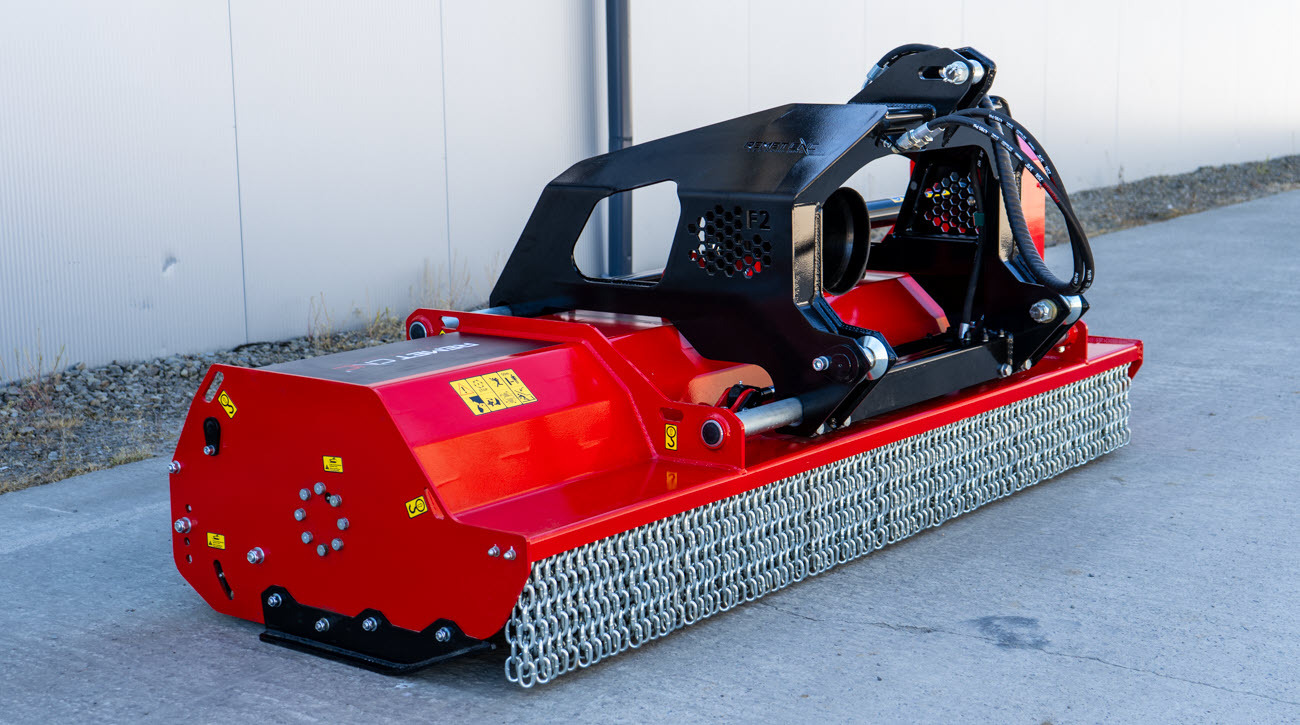
One Northern Woodsmen customer accidentally mowed over a steel T-post hidden in around four-foot grass with an F2 300 Pro. It actually sheared the fence post off, and it dinged one flail, but it didn’t damage it to the point where it needed to be replaced.
It is a strong example of how tough and durable hammer flails can be, although obstacles should still be avoided wherever possible. If you are comparing machines or replacing an older mower, we supply a range of flail mowers for different tractor sizes and land-maintenance applications.
When Should You Stop Using a Vibrating Flail Mower?
Do not ignore new or severe vibration.
If your flail mower is vibrating much more than normal, especially after striking something substantial, stop the mower and inspect the hammer flails before continuing. If you find obvious damage, resolve it before putting the machine back to work.
You should also stop if the vibration becomes progressively worse or is accompanied by unusual noise or another change in performance.
Why Is My Flail Mower Not Cutting Properly?
If your flail mower is not cutting properly, the problem may not be the hammers themselves.
If you’re not getting good power transmission to the mower, it's going to be one of two things: the friction clutch is starting to slip, and the second one is that the belts are loose or stretched and need to be readjusted.
Check the Belts
Loose or stretched belts can affect power transmission and lead to poor cutting performance. Check the belt condition and tension, especially if the mower has seen a lot of use.
Belt adjustment is typically only needed occasionally, but it becomes more relevant on machines that are used heavily.
Why Does My Flail Mower Keep Breaking Belts?
Belt breakage should not happen under normal conditions and with proper maintenance. If your flail mower keeps breaking belts, replacing the belt may fix the immediate issue without solving the reason it failed. Start by checking the belt condition, tension, and overall power-transmission setup before fitting another replacement.
Check Belt Tension
Belts can loosen or stretch with use and may need readjustment, especially on machines that see a lot of operating hours.
Inspect the belts periodically and adjust them according to the manufacturer’s instructions.
Check the Belts for Wear or Damage
Look for obvious signs of wear such as cracking, fraying, glazing, or uneven wear.
If a belt looks damaged, replace it before continuing. However, visible belt damage may only be a symptom, so it is still worth checking why the belt became worn or overstressed in the first place.
Don’t Ignore Repeat Belt Failure
If the same problem returns after fitting a flail mower replacement belt, investigate the cause rather than simply replacing it again.
Check the mower setup, belt adjustment, and whether the machine is being pushed too hard for the conditions. If you are unsure, speak to the manufacturer or dealer before continuing to operate the mower.
Check the Friction Clutch
If your mower uses a friction clutch PTO shaft, make sure it is adjusted correctly. Mike explains that the clutch cannot do its job properly if the adjustment is wrong, and it may begin to slip.
Why Is My Flail Mower Overheating?
If part of your flail mower is becoming unusually hot, stop operating it and identify where the heat is coming from before continuing. Excessive heat can point to increased friction, load, or a lubrication issue, but the cause depends on which component is affected.
Identify Where the Heat Is Coming From
Start by checking where the excess heat is developing, such as around the gearbox, bearings, belt-drive area, or PTO/driveline.
The location of the heat is often the most useful clue when narrowing down the problem.
Check the Lubrication Schedule
Regular greasing is one of the most important maintenance tasks on a flail mower.
We recommend regular greasing during use, with around every eight hours given as a general reference, although you should always follow the maintenance schedule in your mower manual.
How to Prevent Common Problems With Flail Mowers
Good flail mower maintenance can help reduce many common problems with flail mowers before they interrupt a job. The key is to keep on top of a few simple checks and deal with damage early.
Ensure you complete these flail mower maintenance tasks:
- Grease the mower regularly - We recommend regularly greasing your flail mower after every use and every eight hours as a general reference. Always follow the maintenance schedule in your mower manual.
- Check belt tension periodically - Belts can loosen or stretch over time, especially with heavier use, so inspect and readjust them when needed.
- Inspect the hammers after an impact - If you hit a rock, stump, or another substantial obstruction, check the hammer flails before continuing. If one is damaged, you do not necessarily need to replace the full set.
- Clean dirt and debris off after use - Scrape or spray away debris so it does not hold moisture against the mower during storage.
- Store the mower inside where possible - Indoor storage is preferable where space allows, particularly during longer periods out of use.
- Walk unfamiliar ground before mowing - Check tall or overgrown areas for hidden rocks, fence posts, and other obstacles that could damage the mower.
Keep Your Flail Mower Working at Its Best
The main takeaway is simple: spotting the warning signs early and carrying out the right checks can stop common flail mower problems from turning into bigger repairs.
By dealing with vibration, poor cutting, overheating, or belt issues as soon as they appear, you can protect the mower, reduce downtime, and keep it performing reliably when you need it.
That means fewer interruptions, fewer unnecessary replacement parts, and more time getting on with the job.
Looking for a durable flail mower or replacement part? Shop our flail mowers and replacement parts. If you have a specific question regarding a problem your flail mower is experiencing, please contact us, and we will provide you with advice.